


Reinforced vs Non-Reinforced Water-Activated Tape: How to Choose
2026-10-18 20:16
Reinforced and non-reinforced water-activated tape can look similar on a sealed brown carton. The distinction becomes more useful when a buyer asks what the closure must withstand: routine handling, repeated transfers, pressure from the contents or an awkward carton format. A purchasing specification should connect those demands to a particular tape grade and a repeatable application method.
Recycle Paking lists both reinforced water-activated paper tape and non-reinforced water-activated paper tape. Comparing these categories is a starting point. The final choice should follow a trial using the intended carton, contents and dispenser.
Understand what reinforcement changes
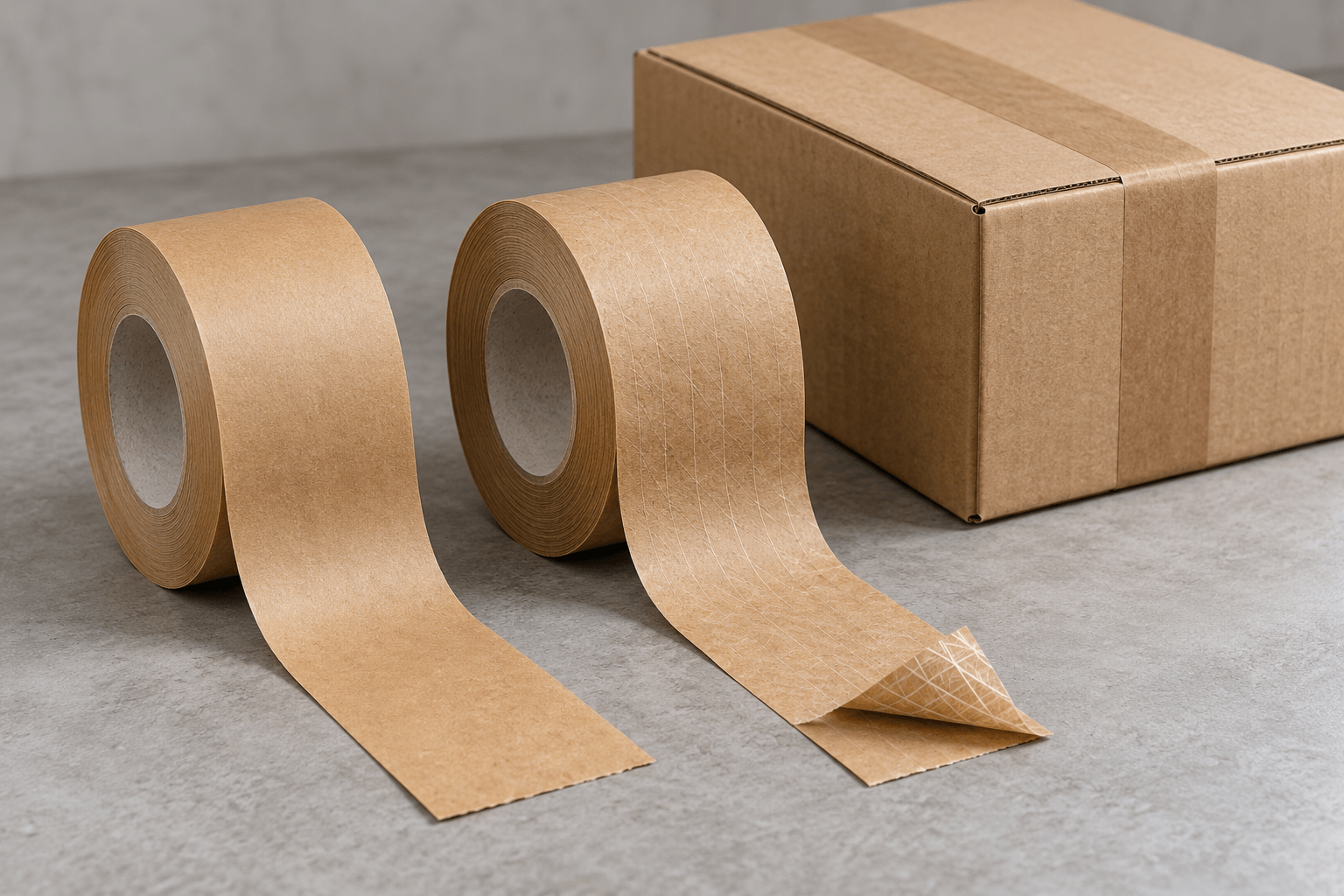
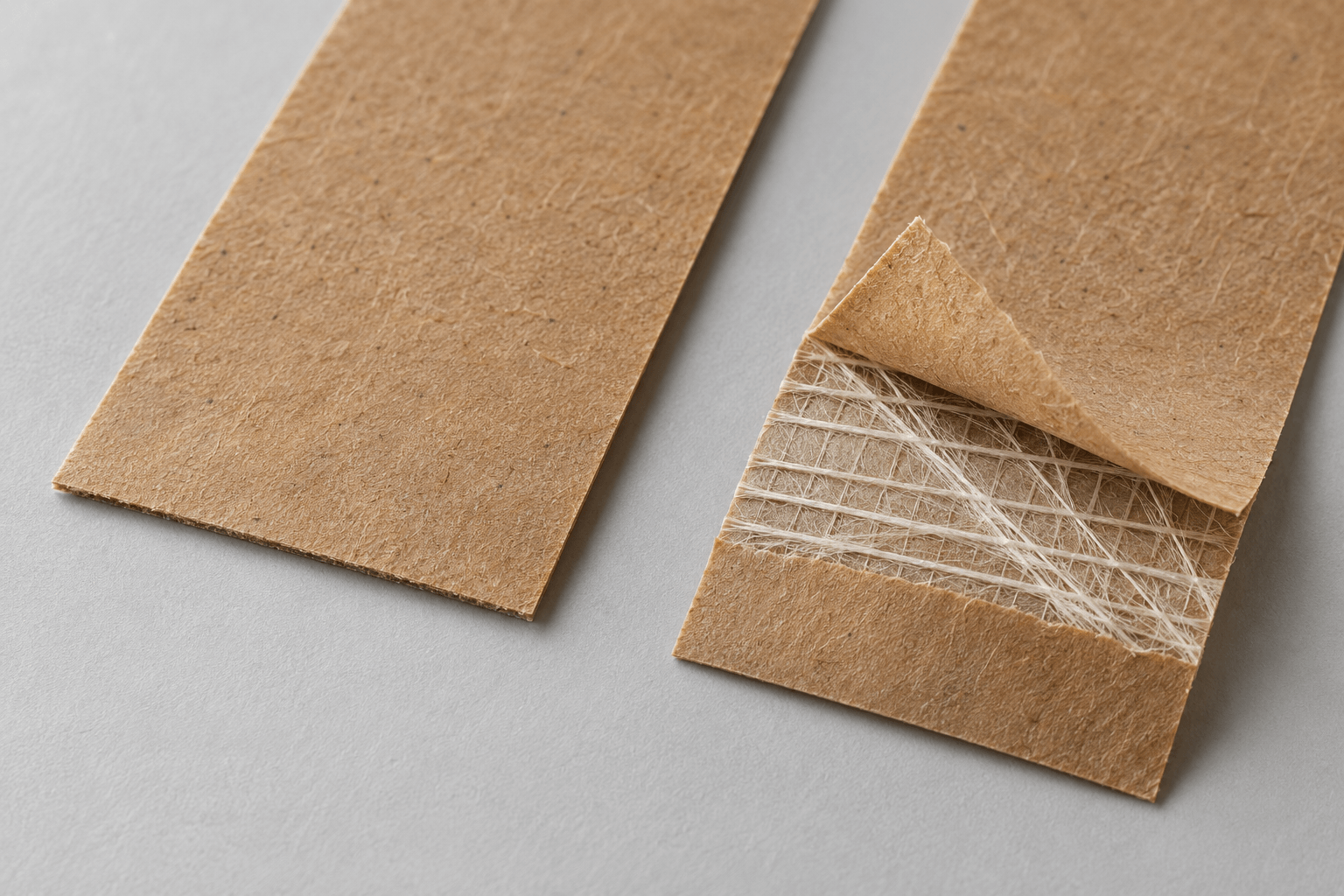
Non-reinforced grades use a paper backing without added reinforcing strands. Reinforced grades incorporate additional strands; fiberglass is a common example. IPG's tape-selection guidance distinguishes these constructions, and its 235 product specification provides one example of a fiberglass-reinforced grade. These references describe material categories and individual products, rather than a universal performance rating.
Ask each supplier to identify the proposed backing, reinforcement, adhesive system and technical data. Tape color and apparent thickness do not provide enough information for a comparison. Two reinforced products may have different specifications, so keep the exact grade name attached to every sample and trial record.
Begin with the way a seal could fail
Examine the carton before attributing a problem to tape strength. Are the flaps meeting evenly? Is the box overfilled? Does the sealed surface carry dust, a coating or heavy printing? Are the contents moving against the closure? Record what actually happens: the tape backing tears, an edge lifts, the carton liner separates or a flap deforms.
These observations help frame a supplier discussion. A torn backing and poor adhesive contact are different problems and may call for different changes. Include photographs of failures and retain the packing configuration. Otherwise, changing the tape, carton and application settings together makes it difficult to identify which adjustment helped.
Give the plain-paper option a fair evaluation
For routine cartons, include a non-reinforced grade in the comparison when the supplier considers it suitable. Evaluate whether the completed closure meets the agreed requirements without additional repair strips or repeated application. The decision should reflect the result on your cartons, rather than a blanket rule that every shipment needs reinforcement.
Where greater backing resistance is needed, request reinforced candidates with relevant test information. Do not assign a maximum carton weight from the category name alone. Ask how the supplier's recommendation accounts for box size, contents, handling and the intended sealing pattern.
Treat the dispenser as part of the specification
Confirm tape width, roll dimensions, core requirements and the dispenser's ability to feed, moisten and cut the proposed grade. A similar-looking roll should not be assumed compatible. Recycle Paking's water-activated tape dispenser is a relevant option to discuss alongside the consumable; obtain confirmation for the exact tape-and-machine combination.
Application conditions also deserve attention. The Better Packages 500 manual explains how insufficient or excessive moistening can affect a seal. Follow the instructions for the actual equipment and tape selected, including cleaning and adjustment procedures. Establish a consistent routine before comparing grades so a changing application method does not distort the results.
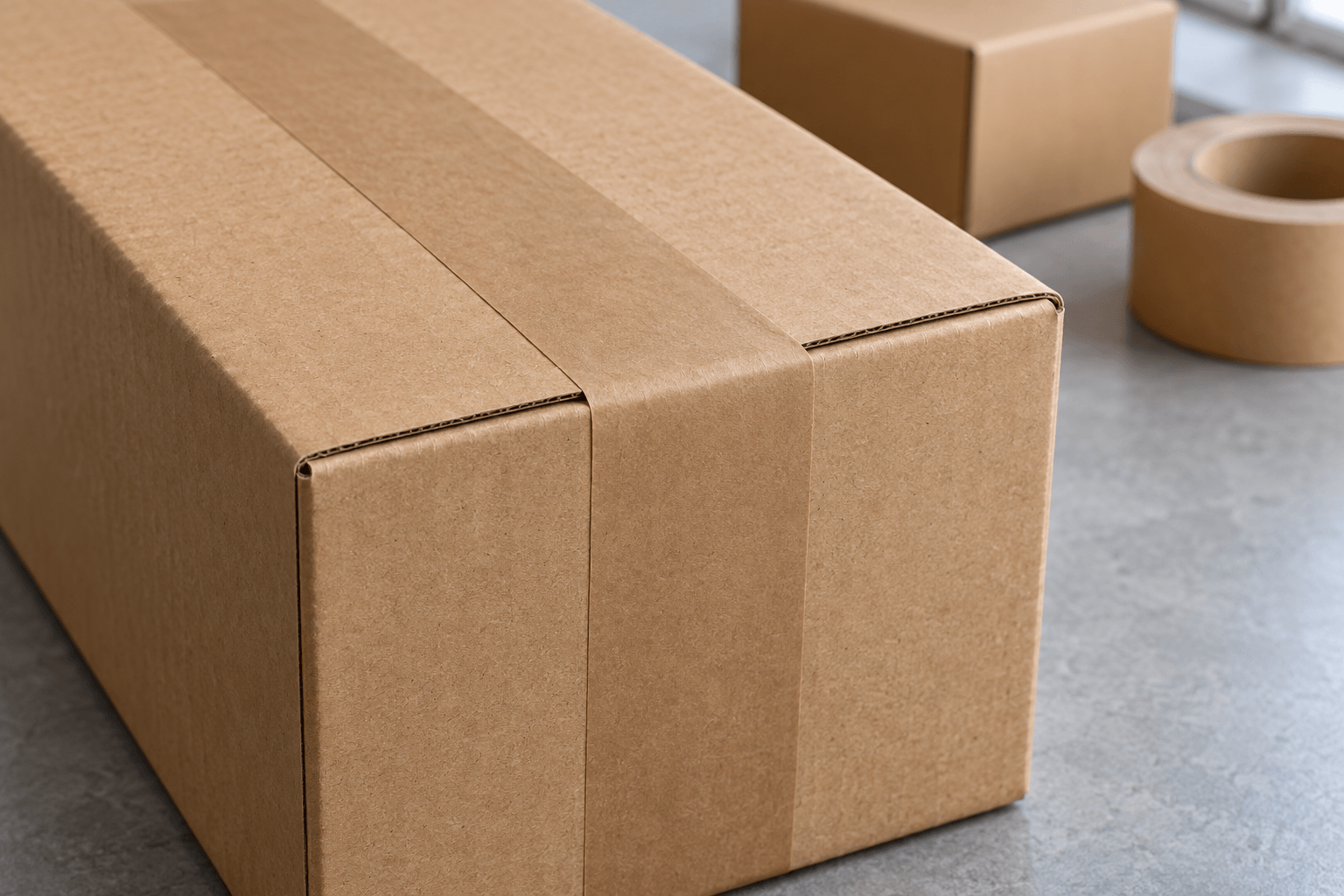
Score a repeatable carton-sealing trial
Use representative cartons and record the tape grade, strip length, placement, application settings and time before handling. Include different operators and the working conditions relevant to the site. Agree in advance on acceptable closure condition after the handling or shipment evaluation selected for the product.
Record clean cuts, application consistency, repair work and total tape consumed per accepted carton. Review these observations alongside purchase price and replenishment requirements. A lower roll price is not a complete comparison if operators repeatedly add extra material; a higher-priced grade also needs a demonstrated reason for its use.
Normalize quotations to the same usable tape length and width, then calculate consumption using the approved sealing pattern. Retain sample rolls and the supplier's stated storage conditions. If a later delivery behaves differently, those records give the team a starting point for checking a grade change, application problem or material issue before changing the specification.
Put the successful result into the order
Specify the approved grade, width, roll format, dispenser configuration and sealing method in the purchasing record. Ask for traceable product information and a process for reviewing substitutions. For environmental claims, request evidence for the actual material construction and intended collection stream instead of relying on the brown-paper appearance.
Does reinforcement make a carton waterproof?
Do not infer water resistance from reinforcement. Ask for evidence relevant to moisture exposure and evaluate the complete carton and closure under the intended conditions.
To compare options, contact us with carton dimensions, packed weight, transport conditions and the dispenser currently in use. Request suitable tape samples and a matching equipment recommendation.
Related News
Read More >-
![Water-Activated Tape Dispenser: A Smarter Solution for Secure and Sustainable Carton Sealing]()
Water-Activated Tape Dispenser: A Smarter Solution for Secure and Sustainable Carton Sealing
Discover how a water-activated tape dispenser improves carton sealing efficiency with kraft paper tape for e-commerce, warehouses, logistics and industrial packaging.
-
![Water-Activated Paper Tape Produced by Paper Tape Machine for Industrial, Warehousing, Logistics and E-Commerce Carton Packaging]()
Water-Activated Paper Tape Produced by Paper Tape Machine for Industrial, Warehousing, Logistics and E-Commerce Carton Packaging
In modern industrial manufacturing, centralized warehousing, cross-regional logistics distribution, and booming e-commerce retail, carton sealing is one of the most fundamental yet critical links in the entire packaging and supply chain system. The stability, safety, environmental performance, and efficiency of carton sealing directly affect cargo integrity, logistics loss rate, standardized warehouse management, customer unboxing experience, and corporate green compliance qualifications. For a long time, most factories, logistics warehouses, and e-commerce fulfillment centers have relied on traditional plastic pressure-sensitive tape for daily carton sealing operations. However, conventional plastic tape has prominent industry pain points: weak adhesion on recycled cartons, easy peeling and warping in high-temperature and humid environments, poor compression resistance for heavy-duty cartons, invisible tampering risks, non-recyclable plastic residues, and low operational efficiency in high-volume batch packaging. To solve these universal packaging problems and adapt to global plastic restriction policies and low-carbon industrial upgrading, automated paper tape machines that produce professional water-activated paper tape have gradually become the standard configuration for high-standard carton packaging in factories, warehousing and logistics parks, and large-scale e-commerce platforms. Water-activated paper tape, also known as gummed kraft paper tape, is manufactured through precise mechanical processing by professional paper tape machines, featuring starch-based eco-friendly adhesive, fiber-integrated bonding performance, tamper-evident safety, and full recyclability, which fully meets the diversified and high-standard carton sealing demands of modern commercial and industrial scenarios.
-
![The Ultimate Guide to Sustainable Shipping: High-Speed Automatic Water-Activated Tape Machine for the European Market]()
The Ultimate Guide to Sustainable Shipping: High-Speed Automatic Water-Activated Tape Machine for the European Market
In an era where the European Union is tightening regulations on plastic waste—such as the Packaging and Packaging Waste Regulation (PPWR)—businesses across Germany, France, the Netherlands, and beyond are urgently seeking sustainable alternatives for their logistics chains. Enter the FT-AT Automatic Water-Activated Tape (WAT) Dispenser. Engineered by XIAMEN SENDAIYU TECHNOLOGY CO., LTD., this industrial-grade machine is not just a tool; it is a strategic asset for e-commerce hubs, 3PL providers, and manufacturing plants aiming for carbon neutrality and operational excellence.