



Automatic Air Cushion Machine for 200mm and 400mm Film
2026-10-21 08:46
A packing operation may need a narrow film web for one group of orders and a wider web for another. Recycle Paking’s automatic air cushion machine lists both 200mm and 400mm applications on the same equipment page. Its extended roll support is therefore a useful feature to examine when planning a machine for more than one packaging format.
The machine turns compatible air-cushion film into inflated packaging at the point of use. A roll of flat film supplies the web, the machine prepares the cushions, and the operator takes the resulting material to the carton. Roll mounting, web guidance, and replenishment are therefore part of how this equipment delivers its output.
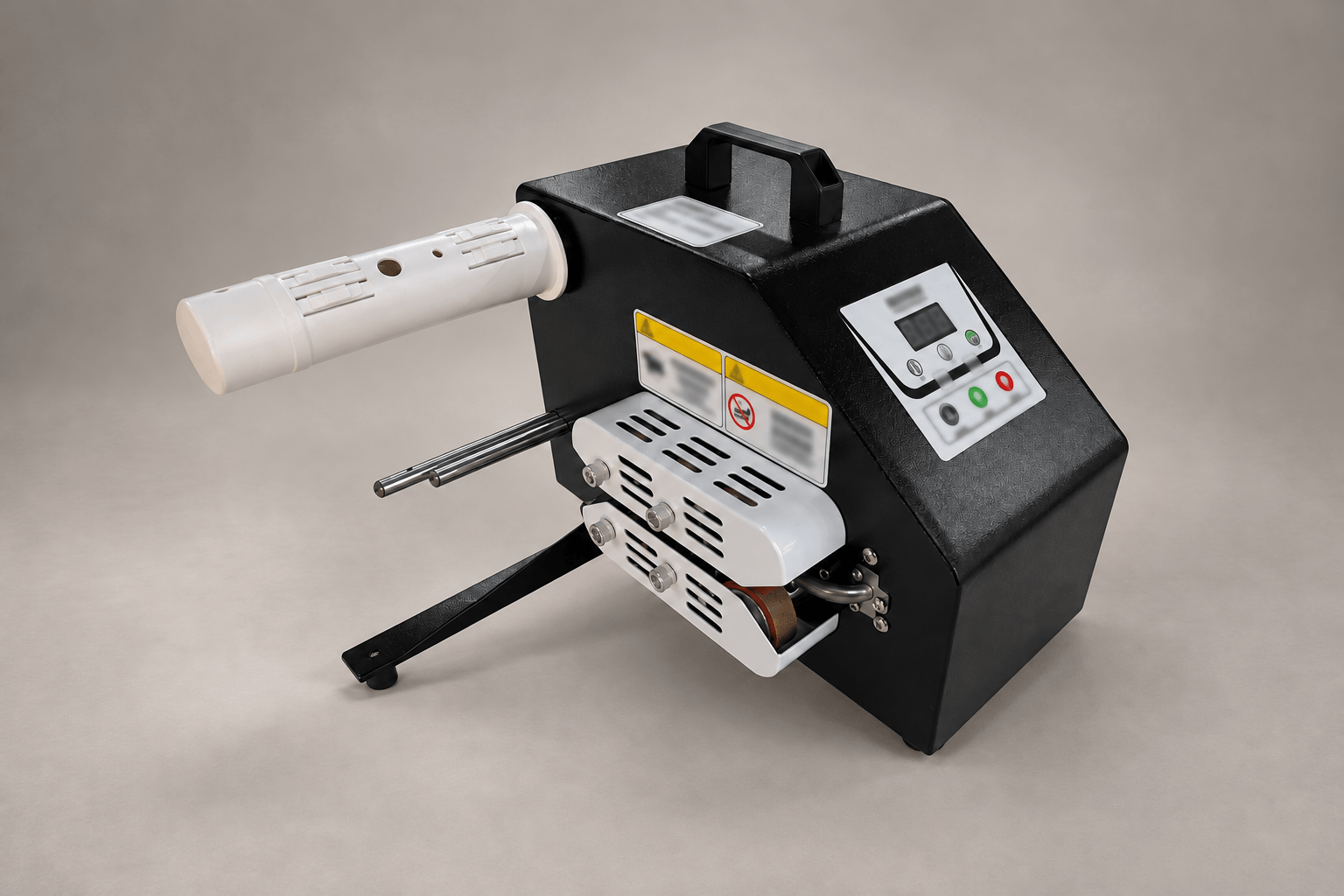
The published machine configuration
| Specification | Listed detail |
|---|---|
| Film application 1 | 200 mm width, 20 µm thickness, 600 m roll |
| Film application 2 | 400 mm width, 20 µm thickness, 300 m roll |
| Linear operating speed | 16 m/min |
| Rated power | 150 W |
| Net machine weight | 7.6 kg |
| Housing | Metal alloy |
These details are published on the current Automatic Air Cushion Machine product page. The two film entries are specific listed applications, rather than a promise that every film with either width will work on the unit.
What the extended roll support contributes
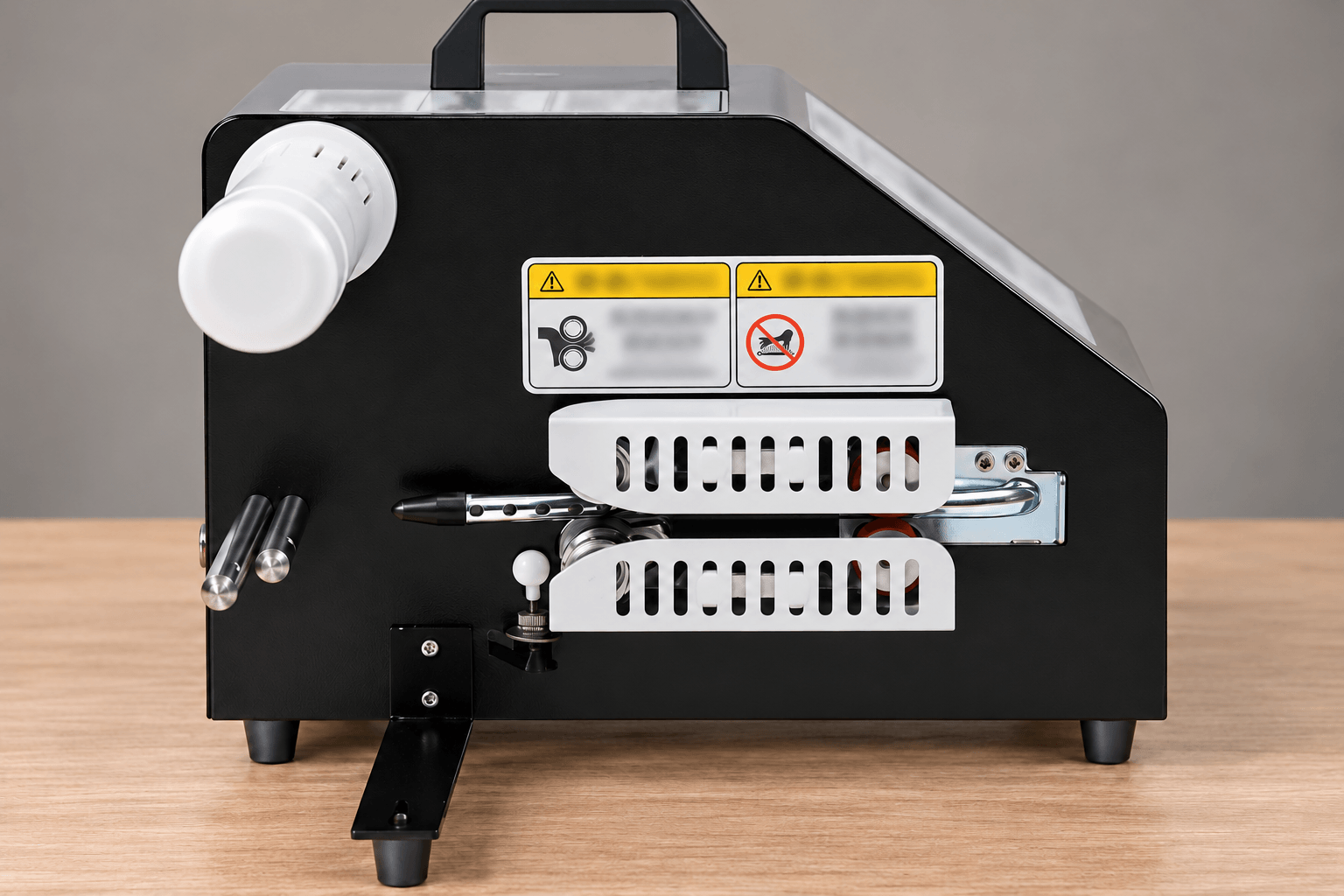
The roll support provides a mounting position for the incoming supply. Below it, separate metal guide rods direct the web toward the guarded working area. The official photos show these parts as distinct assemblies. The spindle carries the supply while the guide arrangement positions the film as it travels through the machine.
When moving between the listed widths, consider the complete loading arrangement. A wider web needs clear space beside the machine as well as a suitable route through the guides. Keep the roll support accessible so replenishment can take place without shifting unrelated cartons or tools. Use the supplied threading instructions for the particular film configuration, keeping the original guards in place.
Use roll length to plan replenishment
The two published applications have different roll lengths. A useful first calculation divides each length by the stated linear speed. This produces a theoretical web-travel duration for the roll, before allowing for pauses, loading, setup, or other interruptions.
| Listed roll length | Calculation at 16 m/min | Theoretical web travel |
|---|---|---|
| 300 m | 300 ÷ 16 | 18.75 minutes |
| 600 m | 600 ÷ 16 | 37.5 minutes |
These figures explain the relationship between roll length and machine feed. They are arithmetic examples, not guaranteed continuous running times or estimates of completed orders. A station that starts and stops with each carton will consume its supply differently from one preparing a batch of cushions for later use.
For daily planning, keep the next compatible roll near the loading position and assign a clear place for the empty core. Where a shift uses both listed applications, identify each roll by its full specification. This makes replenishment an equipment task with a defined supply, instead of relying on width alone to identify the next roll.
Keep film format and finished cushion shape distinct
The 200mm and 400mm entries describe incoming film width. They do not describe the dimensions of every finished air pocket. The cushion pattern comes from the compatible film design being processed. This is why a useful equipment request includes the complete film specification and intended output, even when the required roll width is already known.
At the machine, the operator uses the onboard panel to control operation for the configured application. Keep the supply specification associated with that setup so a replacement roll belongs to the same operating arrangement. When changing applications, reload and set up the unit using its supplied instructions. A width change is part of the machine setup, rather than simply exchanging two visually similar rolls.
Plan around the complete loaded unit
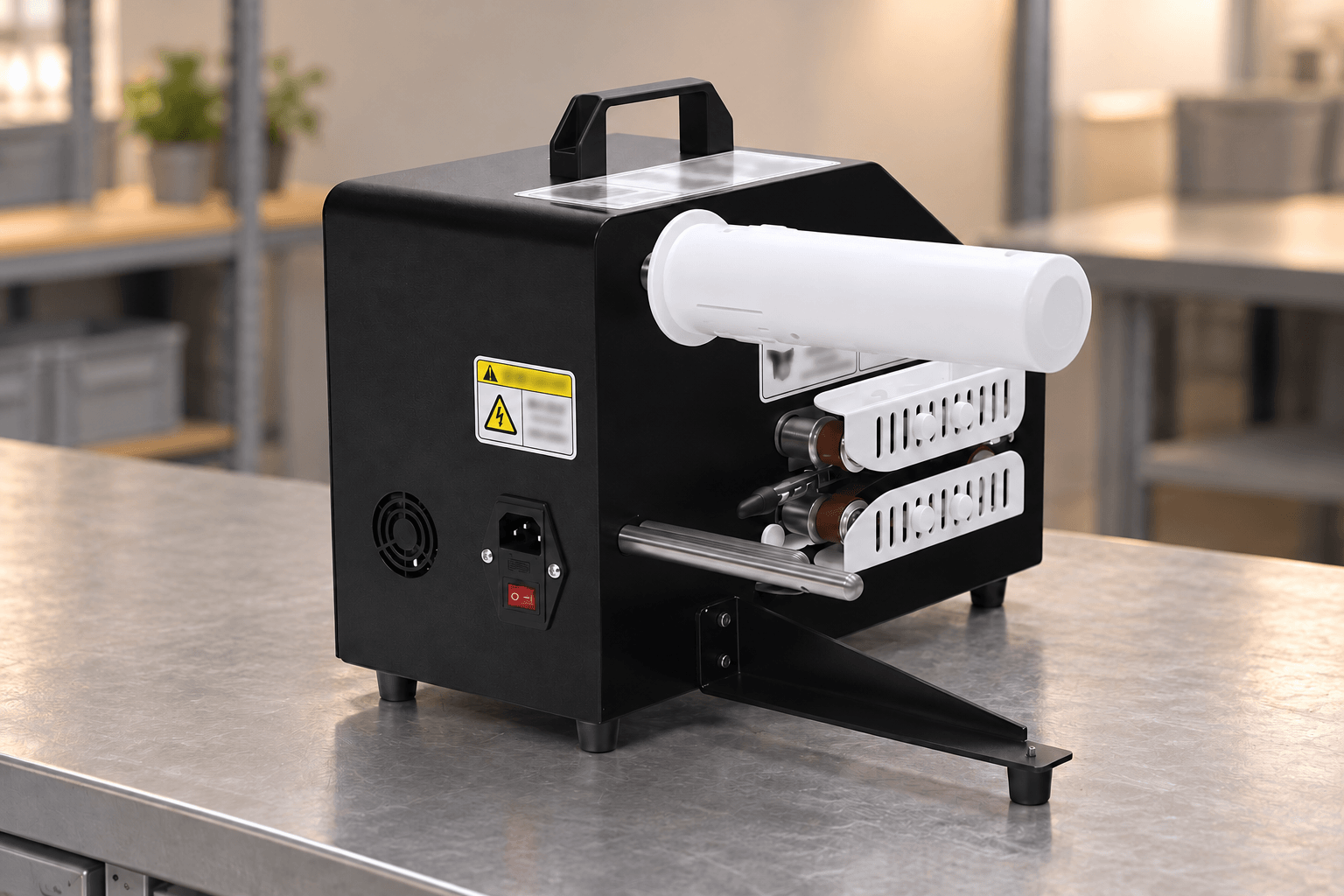
The published net weight describes the machine itself. The loaded roll, prepared output, and any collection container are additional parts of the workstation. Allow the machine, projecting supports, and replenishment access to fit together on a stable working surface. Keep its electrical connection accessible without placing leads in the normal movement route for parcels.
The official images also show the rear power connection and the projecting roll-support structure. Including those sides in a bench plan is more useful than measuring only the area beneath the central housing. A workable installation leaves access for routine tasks throughout the shift, rather than using every available centimetre for the machine body.
Specify the application when requesting the machine
For a distributor or warehouse team, a clear equipment request identifies the film application, expected packing pattern, and intended collection arrangement. If both listed widths are required, include both in the discussion. This gives the supplier a concrete operating requirement and avoids treating the film-width label as a complete description of the setup.
Explore Recycle Paking’s Air Cushion Solution range for the equipment offering. To request a quotation, contact Recycle Paking with the required film specification, destination country, available station layout, and whether output will be prepared per order or in batches.
Related News
Read More >-
![Honeycomb Paper Sleeves: Your Sustainable Packaging Solution]()
Honeycomb Paper Sleeves: Your Sustainable Packaging Solution
Honeycomb paper sleeves are eco-conscious packaging solutions crafted from 100% biodegradable kraft paper. Inspired by nature's hexagonal honeycomb structure, these sleeves provide exceptional 3D shock absorption and cushioning while maintaining a lightweight design. Their sleeve-like form factor ensures seamless wrapping for diverse product shapes.
-
![Paper Bubble Wrap: Sustainable Protective Packaging]()
Paper Bubble Wrap: Sustainable Protective Packaging
Crafted from 100% biodegradable virgin kraft paper, EcoGuard™ Paper Bubble Wrap offers the trusted cushioning of traditional bubble wrap—without the environmental cost. Protect your products and the planet with this fully recyclable, compostable alternative.
-
![How to Safely Ship Wine Bottles: 5 Eco-Friendly Packaging Solutions]()
How to Safely Ship Wine Bottles: 5 Eco-Friendly Packaging Solutions
Whether shipping a special gift or managing a wine business, ensuring bottles arrive intact is crucial. Discover our expert-recommended methods to protect your wine during transit, combining sustainability with superior cushioning.
-
![Industry Applications and Future Prospects of Paper Bubble Machines]()
Industry Applications and Future Prospects of Paper Bubble Machines
Industry Applications and Future Prospects of Paper Bubble Machines As environmental awareness continues to grow, more and more businesses are seeking sustainable packaging solutions. The Paper Bubble Machine, an eco-friendly packaging device, is gaining popularity across various industries. It not only helps companies reduce plastic usage but also significantly improves packaging efficiency. Industry Applications
-
![Promising Future of Paper Bubble Machines in the Sustainable Packaging Arena]()
Promising Future of Paper Bubble Machines in the Sustainable Packaging Arena
The Paper Bubble Machine serves multiple purposes on its prime stage – from use in personal households to large scale industrial necessity. This versatility opens new markets and opportunities for its application and proliferation.
-
![The Rise of Water-Activated Tape Dispensers: Applications and Future Market Trends]()
The Rise of Water-Activated Tape Dispensers: Applications and Future Market Trends
Water-activated tape dispensers provide an eco-friendly packing solution that surpasses many traditional methods. Instead of using synthetic materials, WAT dispensers use gummed or water-activated adhesive tape, made primarily of paper, which is renewable and 100% recyclable.
-
![What is a Honeycomb Padded Mailer?]()
What is a Honeycomb Padded Mailer?
Honeycomb Padded Mailers have become an important packaging solution in e-commerce recently because it is extremely cost-effective and eco-friendly. It is replacing corrugated boxes on many occasions.
-
![Choosing The Right Cardboard Shredding Machine For Your Packaging]()
Choosing The Right Cardboard Shredding Machine For Your Packaging
When it comes to selecting the right cardboard shredding machine for your packaging, there are several factors to consider. The right machine can greatly enhance your production efficiency and product quality, while also ensuring cost-effectiveness. Here are some key points to keep in mind when making your choice.


